Why Children Should Start Sport Young—Especially Artistic Sports

Approximate reading time: 7–8 minutes
When parents enrol a young child in sport, they are not simply choosing an after-school activity. They are giving their child opportunities to move, explore, make friends, practise new skills and develop confidence in what their body can do.
Starting sport at a young age does not need to mean early competition, intensive training or
choosing one sport for life. For young children, the priority should be enjoyment, variety and learning the foundations of movement in a safe and supportive environment.
Artistic sports—including acrobatics, gymnastics, aerial arts, dance and cheerleading—can provide an especially broad introduction to movement. These activities combine strength, balance, coordination, mobility, rhythm, creativity and body awareness. When they are taught appropriately, they can help children build skills that support participation in many other physical activities.
Australian children need regular opportunities to move
The Australian Government recommends that children and young people aged 5–17 complete at least 60 minutes of moderate-to-vigorous physical activity every day. This should include vigorous activity and activities that strengthen muscles and bones on at least three days each week.
The recommendation is not only about physical fitness. The Australian Government identifies a wide range of potential benefits from regular activity, including stronger muscles and bones, healthy growth, improved coordination, greater confidence, better concentration, stronger teamwork skills and lower levels of anxiety and stress.
Children do not need to complete all 60 minutes in one organised class. Walking, outdoor play, school activities, bike riding and active time with family all contribute. Organised sport can form one valuable part of a much bigger pattern of movement.
The World Health Organization similarly reports that physical activity in children and adolescents supports physical fitness, bone health, healthy growth, motor development, cognitive outcomes and mental health.
The message is clear: regular movement matters during childhood. The challenge is helping children find forms of movement they enjoy enough to continue.
Starting young is about learning—not specialising
“Starting young” can sometimes sound like a child must begin intensive training as early as possible to avoid falling behind. That is not what healthy participation should look like.
Young children benefit from learning a wide variety of fundamental movement skills. These include balancing, jumping, landing, running, turning, climbing, rolling, throwing and controlling the body in different positions.
These skills provide a foundation for later participation in sport and recreation. A child who feels capable when moving is more likely to approach new physical challenges with confidence.
Early participation should therefore focus on:
Enjoyment and curiosity.
Exposure to varied movements.
Safe, age-appropriate activities.
Positive relationships with coaches and other children.
Gradual skill development.
Opportunities to succeed without pressure.
Learning how to participate safely in a group.
A four-year-old does not need to train like a high-performance athlete. They need opportunities to play, experiment, listen, take turns and discover what movement feels like.
Starting early is valuable because it provides more time to develop these foundations gradually—not because children need to rush towards advanced skills.
Developing physical literacy
The Australian Sports Commission uses the term physical literacy to describe the skills, knowledge, behaviours, confidence and motivation that help people lead active lives.
Physical literacy is broader than fitness. It includes four connected areas:
Physical: movement skills and physical capacity.
Psychological: confidence, motivation and emotional responses to movement.
Social: interacting and participating with other people.
Cognitive: understanding how, why and when to move.
This is an important way to think about children’s sport. A child may be learning a physical skill, but they may also be learning how to listen to instructions, manage frustration, work with a partner, assess a challenge or try again after a mistake.
The most valuable children’s programs develop the whole athlete rather than focusing only on whether a skill was completed successfully.
Why artistic sports offer something different
All quality sports can contribute to a child’s development. Artistic sports are distinctive because they often ask children to combine several physical and cognitive abilities within the same activity.
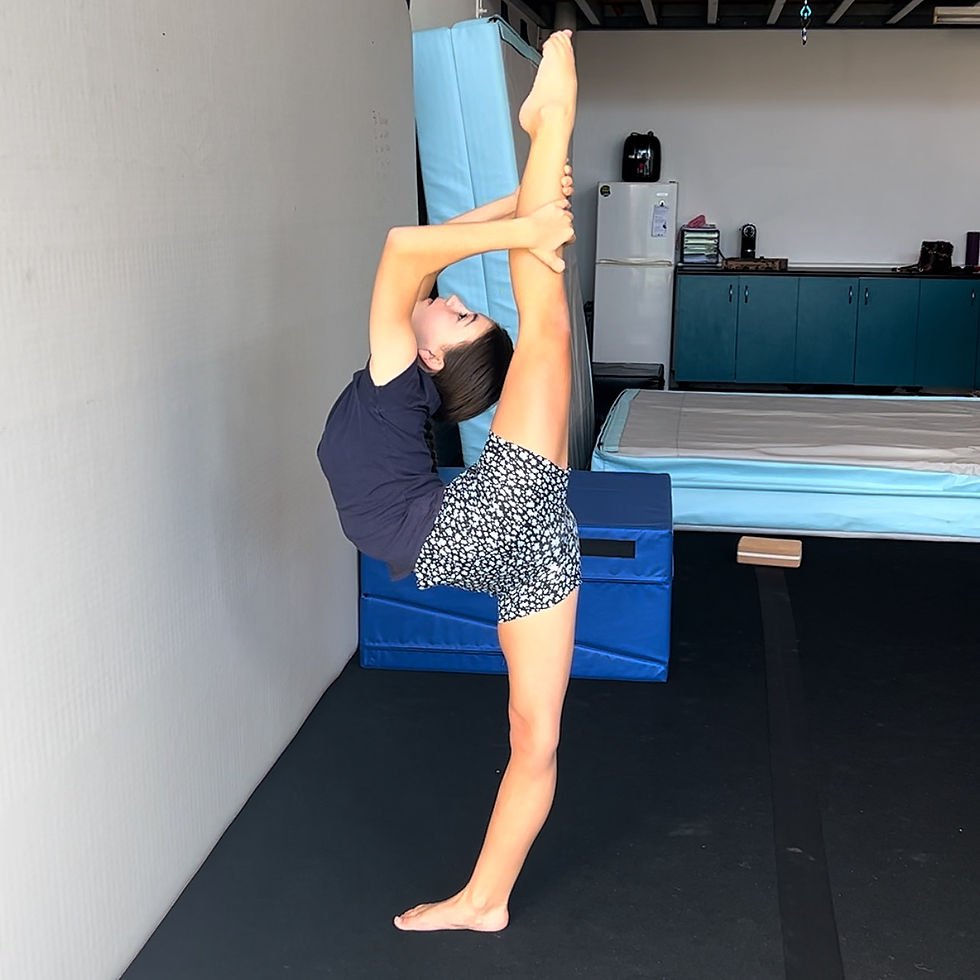
An acrobatics, gymnastics, aerial, dance or cheerleading class may involve balance, rhythm, coordination, strength, flexibility, spatial awareness, sequencing and creative expression.
Balance and body control
Artistic activities regularly challenge children to control their bodies in different positions. They may balance on one leg, transfer weight through their hands, move across equipment or maintain a shape while changing direction.
Balance is not one fixed ability. It develops through experience in different positions, environments and movement tasks.
Coordination
Coordination requires different parts of the body to work together at the right time. Artistic sports may ask a child to combine arm movements, leg actions, changes of direction, rhythm and visual information.
These challenges can help children become more adaptable movers. The aim is not immediate perfection; coordination develops through repetition, variety and age-appropriate practice.
Strength and weight-bearing
Many artistic activities use the child’s own body weight. Climbing, hanging, supporting, jumping, landing and holding shapes can all contribute to muscular development when taught progressively.
The Australian physical activity recommendations specifically include muscle- and bone-strengthening activities as part of a healthy week for children and young people.
The key is appropriate progression. Children should not be rushed into skills that exceed their current strength, technique or confidence.
Mobility and movement range
Artistic sports often introduce children to moving their joints through different ranges. This can support movement variety and help children understand the positions their bodies can create.
However, more flexibility is not automatically better. Mobility training should be controlled, age-appropriate and supported by strength. Children should never be forced into painful positions.
Spatial awareness
Spatial awareness is the ability to understand where the body is in relation to the environment.
Rolling, turning, jumping and moving around equipment can challenge children to recognise direction, distance, speed and body position. These abilities are relevant not only to artistic sports but to many everyday and sporting movements.
Rhythm, sequencing and memory
Children in artistic sports often learn short combinations or routines. They need to remember the order of movements, respond to music or cues and coordinate their actions with other people.
This adds a cognitive component to physical participation. Children are not only moving—they are listening, remembering, planning and adapting.
Creativity and expression
Artistic sports can allow children to explore how movement communicates an idea, emotion or character. This may particularly appeal to children who enjoy both physical challenges and creative expression.
For some children, this combination is what makes physical activity enjoyable. Enjoyment is important because a program can only provide long-term value if the child wants to keep participating.
Social and emotional learning through sport
Sport gives children opportunities to practise social and emotional skills in a real environment.
They may need to:
Wait for a turn.
Listen while someone else is speaking.
Work with a partner or group.
Ask for assistance.
Respond to feedback.
Manage disappointment.
Try again after an unsuccessful attempt.
Celebrate another athlete’s progress.
Perform or practise while others are watching.
These skills do not appear automatically because a child attends sport. The environment matters.
A supportive coach helps children understand that mistakes are part of learning. They recognise effort and improvement, provide achievable challenges and avoid comparing children unnecessarily.
When children feel safe enough to try, make mistakes and ask questions, sport can become a valuable place to develop confidence and independence.
Confidence grows from achievable experiences
Confidence is not created by repeatedly telling a child that they are talented. It develops when a child experiences the connection between effort, practice and improvement.
A child might initially be unable to balance for five seconds, remember a sequence or climb onto a piece of equipment. With appropriate instruction and repeated practice, the activity becomes more manageable.
That experience teaches an important lesson:
“I could not do this yet, but I kept working and improved.”
This type of confidence can extend beyond one particular skill. It helps children see themselves as capable learners.
Coaches play an important role by choosing challenges that are difficult enough to be meaningful but achievable enough that the child can experience progress.
What should parents look for in an early sport program?
The quality of the environment matters more than how impressive the advanced athletes appear.
A good introductory program should include:
Coaches who communicate calmly and respectfully.
Activities suited to the children’s ages and abilities.
Clear safety expectations.
Appropriate supervision.
Progressions that build skills gradually.
Limited unnecessary waiting.
Opportunities for every child to participate.
Positive feedback that recognises effort and improvement.
Adaptations for different learning or movement needs.
A culture in which children can say they are unsure, uncomfortable or in pain.
Parents should also consider how their child responds before and after class. Some nervousness around a new activity is normal, but children should generally feel welcomed, supported and increasingly comfortable within the environment.
More is not always better
Although starting sport young can be beneficial, children still need rest, free play, sleep, family time and opportunities to participate in activities outside sport.
Early participation should not become early pressure.
A child does not need to train every day, compete immediately or specialise in one activity before they are ready. Training volume should suit their age, development, health and level of interest.
Warning signs that the balance may need to change include persistent fatigue, recurring pain, declining enjoyment, anxiety about training, sleep disruption or feeling unable to take a break.
Healthy sport should add to childhood—not take it over.
The best sport is one a child wants to return to
There is no single activity that is right for every child. Some children enjoy team sports, some prefer individual challenges, and others are drawn to artistic movement.
Artistic sports can provide a diverse physical foundation because they combine athletic development with creativity, performance and expression. They may help children develop strength, coordination, balance, mobility, spatial awareness and confidence within the same environment.
However, the greatest benefit comes from how the activity is taught.
Children are more likely to build a positive relationship with movement when they feel safe, included and capable of progressing at their own pace.
Starting young is not about creating an elite athlete as quickly as possible. It is about helping a child discover that movement can be enjoyable, challenging and part of a healthy life.
About Neophyte Performance
At Neophyte Performance, we introduce children to movement through age-appropriate acrobatics, aerial arts, cheerleading and performance-based activities.
Our goal is to help athletes build strong movement foundations, confidence and a positive relationship with physical activity. Skills are introduced progressively, and athletes are supported according to their individual readiness and experience.
References and further reading
Australian Government Department of Health, Disability and Ageing — Recommendations for children and young people aged 5–17
Australian Sports Commission — Physical literacy
World Health Organization — Physical activity


Comments